
Not everything outside our control should be dismissed
There are times when we find ourselves carrying concerns about situations we have very little power to change. How we respond to those concerns, in ourselves and in others, matters.
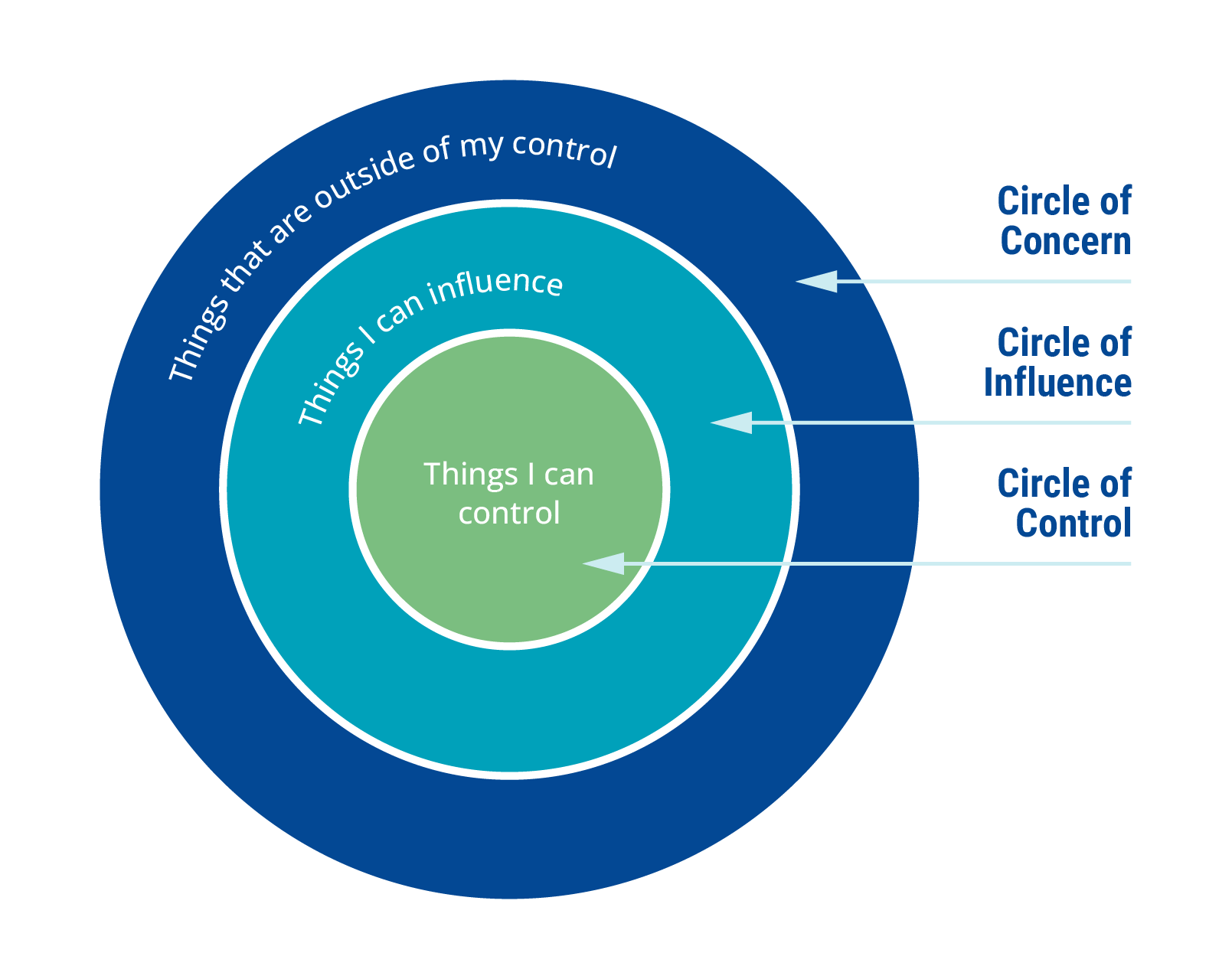
Most of us have come across the three circles – the circles of control, influence and concern.
There are things we can control – in the circle of control.
Things we can influence – in the circle of influence.
And things that concern us, but sit outside our control or influence.
It is a useful model. I use it regularly because it can help us work out where to place our finite attention and energy.
But recently, during a conversation with a group of health leaders, I was reminded of something important. It can become less helpful when we apply it too quickly.
Someone raises a concern about workload, funding, staffing, access to services, or a decision being made much higher in the system.
And the response, sometimes well-intentioned, becomes:
“Well, you can’t control that, so let’s move on”
Technically, that may be true.
Relationally, it may be completely unhelpful.
The circle of concern is called that for a reason
If something sits in our circle of concern, it matters to us.
It may affect the clients we care for, the quality of the service we can provide, our colleagues, our professional standards or our own capacity to keep doing the work sustainably.
So discovering that we cannot control something does not suddenly make it insignificant.
And it certainly does not make our emotional response to it unreasonable.
This is particularly important in our sector because many of the things that concern us cause considerable distress and are beyond the control of individual practitioners, supervisors, managers or even senior leaders. These include, but are not limited to:
Funding decisions
Workforce shortages
Eligibility rules
Service gaps
Policy changes
Broader system design
We can expect senior leaders to have greater influence over some issues. But they also regularly find themselves accountable for circumstances they did not create and cannot fix.
That reality deserves to be named.
We are working within some genuine wicked problems
One of the tensions I explore in Caring Costs is that we are trained in best practice, but not funded for it.
As health professionals, we are educated, regulated and professionally accountable for delivering high-quality care, yet we’re often trying to meet those standards inside systems where the necessary time, staffing or resources are not available.
That gap is not solved by reminding someone to focus on what they can control.
Sometimes the person already knows perfectly well that they cannot change the funding model.
That is precisely why they are distressed or challenged.
Perhaps a clinician knows what their client needs, but cannot access it.
A team leader knows that workloads are unsustainable, but cannot approve another position.
A service manager can see the consequences of a policy decision but has little authority to change it.
These are not failures of resilience.
They are difficult realities.
And when people repeatedly experience the gap between what they know should happen and what the system makes possible, the cost can be significant.
Validation comes before redirection
When someone brings us one of these concerns, our first task may not be to solve it.
It may be to sit with the reality of it.
To listen.
To understand.
To acknowledge:
“Yes, this is difficult.”
“I can understand why you are concerned.”
“This matters.”
“I wish we had more capacity to change this too.”
Not as a technique.
People have very good bullshit radars.
Genuine validation requires us to be prepared to face an uncomfortable truth alongside another person, without immediately trying to make the discomfort disappear.
Because when something important is dismissed, people rarely become more capable of moving forward.
They often become more stuck.
Now they are dealing with the original concern and the experience of not feeling heard.
Then we can ask a different question
Acknowledging what is difficult does not mean we have to stay there.
Once the reality has been properly acknowledged, the circles become enormously useful.
What genuinely sits outside our control here?
Naming that honestly can sometimes be a relief. We are not personally responsible for solving the entire healthcare system.
Where might we have influence?
Perhaps through advocacy, collective action, escalating concerns, changing a team process, contributing to a submission, providing feedback, or making the consequences of a decision more visible.
Influence is not control. We need to be careful not to pretend otherwise.
And finally:
What remains within our control?
Our own responses.
The standards we bring to our relationships
How honestly we communicate
Where we place our attention
The boundaries we establish around unsustainable over-functioning
The kind of colleague, supervisor or leader we choose to be while navigating an imperfect system
The aim is not to stop caring about what sits beyond our control until we care only about ourselves.
It is about directing our energy wisely without becoming indifferent to what matters.
Perhaps we need all three circles
There are things we need to act on.
Things we need to advocate for.
And things we may need to grieve, protest, talk about, process, or simply acknowledge because they matter deeply and cannot currently be changed.
Wise responses require us to tell the difference.
So the next time someone brings you something that sits firmly in their circle of concern, perhaps resist moving too quickly to:
“What can you control?”
Start somewhere else. “Tell me what is concerning you about this.”
Be there long enough to genuinely understand it.
Then, together, consider where control ends, where influence may still exist, and where precious energy is best placed.
Because sometimes helping people move forward begins with making sure they do not have to move past something before it has been properly heard.
These kinds of conversations are also part of supporting professional wellbeing in supervision. Supervisors do not need to have the answers or be able to resolve the systemic pressures affecting their supervisees. But they can create space to recognise what is happening, explore its impact, and help supervisees consider where they may have control, influence or need for support.
Upcoming public training programs

Relevant previous newsletters you may be interested in…




The aim is not to stop caring about what sits beyond our control until we care only about ourselves. It is about directing our energy wisely without becoming indifferent to what matters.